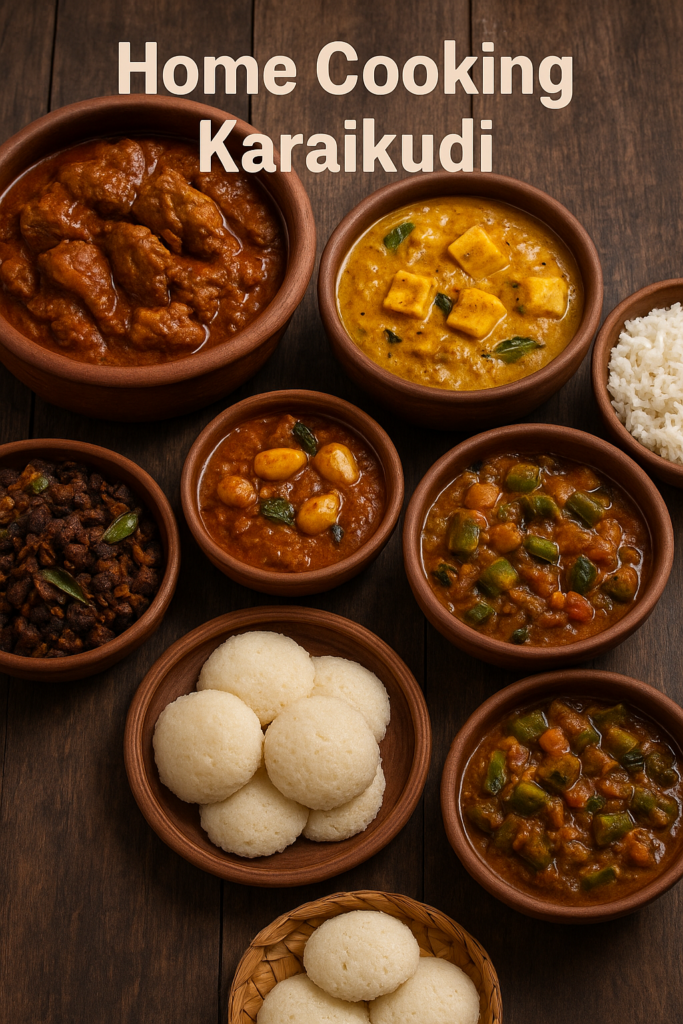
Home Cooking Karaikudi – Traditional Chettinad Flavours Made Fresh at Home
Home Cooking Karaikudi represents the soul of authentic Chettinad cuisine, prepared using age-old methods, freshly ground spices, and traditional recipes passed down through generations. Karaikudi, the culinary capital of the Chettinad region in Tamil Nadu, is globally known for its bold flavours, aromatic masalas, and signature dishes that celebrate the rich heritage of the Chettiar community. Today, home cooking in Karaikudi continues to preserve these traditions, making it one of the finest representations of South Indian cooking.
In this detailed guide, we explore the unique elements of Home Cooking Karaikudi, its flavours, traditional ingredients, cooking styles, famous dishes, and why Chettinad home cuisine is admired by food lovers worldwide.
The Essence of Home Cooking in Karaikudi
Karaikudi cuisine is rooted in the idea of simple living with rich, flavour-packed food. Every dish is prepared using:
- Freshly ground masalas
- Locally sourced produce
- Sun-dried herbs and spices
- Healthy cooking techniques
- Clay pots (manchatti) and iron kadais
Unlike commercial cooking, home cooking in Karaikudi focuses on balance—moderate heat, precise roasting, and natural flavors. This is what makes Karaikudi dishes stand out with unique taste and aroma.
Why Karaikudi Home Cooking Is Unique
1. Signature Spice Blends
Chettinad cuisine uses freshly roasted and ground spices such as black pepper, fennel, cinnamon, star anise, cumin, and red chilies. Each household has its own version of Chettinad masala.
2. Use of Traditional Cookware
Food tastes different when cooked in clay pots, iron pans, and brass utensils. Karaikudi families still rely on these for better flavour and health benefits.
3. Farm-Fresh Ingredients
Vegetables, spices, and herbs are often sourced from local farms, ensuring freshness and authenticity.
4. Natural Preservation Methods
Sun-drying, pickling, and fermenting are common in Chettinad households, adding depth to the cuisine.
Popular Dishes in Home Cooking Karaikudi
Karaikudi homes prepare a wide variety of vegetarian and non-vegetarian dishes. Some signature favourites include:
Non-Veg Specialties
- Karaikudi Chicken Curry – Spicy, aromatic, and made with freshly ground masala
- Nattu Kozhi Kuzhambu – Country chicken cooked with bold spices
- Mutton Chukka Varuval – Dry-fried mutton with pepper and curry leaves
- Eral Thokku – A spicy prawn masala loved in coastal households
Vegetarian Specialties
- Palkatti Chettinad Masala
- Kaikari Kurma
- Kathirikai Kozhambu (Brinjal Curry)
- Chettinad Vazhakkai Roast (Raw Banana Fry)
- Poondu Kuzhambu (Garlic Gravy)
- Karuveppilai Kuzhambu
Breakfast Dishes
- Kuzhi Paniyaram
- Kara Dosa
- Kal Dosa
- Adai with Avial
Each dish is prepared with attention to detail, ensuring that the flavours remain true to Karaikudi’s identity.
Cooking Techniques That Define Karaikudi Cuisine
1. Slow Cooking
Most dishes are simmered slowly to enhance flavour and texture.
2. Roasting and Grinding Spices
Chettinad masala is always roasted fresh, giving dishes a smoky, robust taste.
3. Using Coconut Sparingly
Unlike other South Indian cuisines, Karaikudi uses coconut in moderate quantities.
4. Marination in Spices
For non-vegetarian dishes, marinating with black pepper, turmeric, and chili powder is essential.
5. Oil Tempering
Tempering mustard, curry leaves, and small onions in gingelly oil enhances aroma and taste.
Why People Love Home Cooking Karaikudi
✔ Authentic Taste
It delivers the traditional Chettinad flavour that restaurants often fail to replicate.
✔ Healthy & Fresh
Homemade masalas, fresh vegetables, and clay-pot cooking ensure better nutrition.
✔ Bold & Spicy
Karaikudi dishes are known for their intensity and depth, attracting spice lovers.
✔ Perfect for All Occasions
Whether for everyday meals or special celebrations, Karaikudi dishes never fail to impress.
Home Cooking Karaikudi for Modern Kitchens
Many people today adapt Chettinad recipes to contemporary kitchens without losing authenticity. With mixer grinders replacing manual grinding stones and non-stick pans replacing iron tavas, the core flavours remain preserved through:
- Proper roasting
- Accurate spice proportions
- Use of curry leaves and gingelly oil
- Following traditional methods
Even restaurants and catering services now include Karaikudi-style dishes due to increasing demand for authentic South Indian flavors. Learn more